
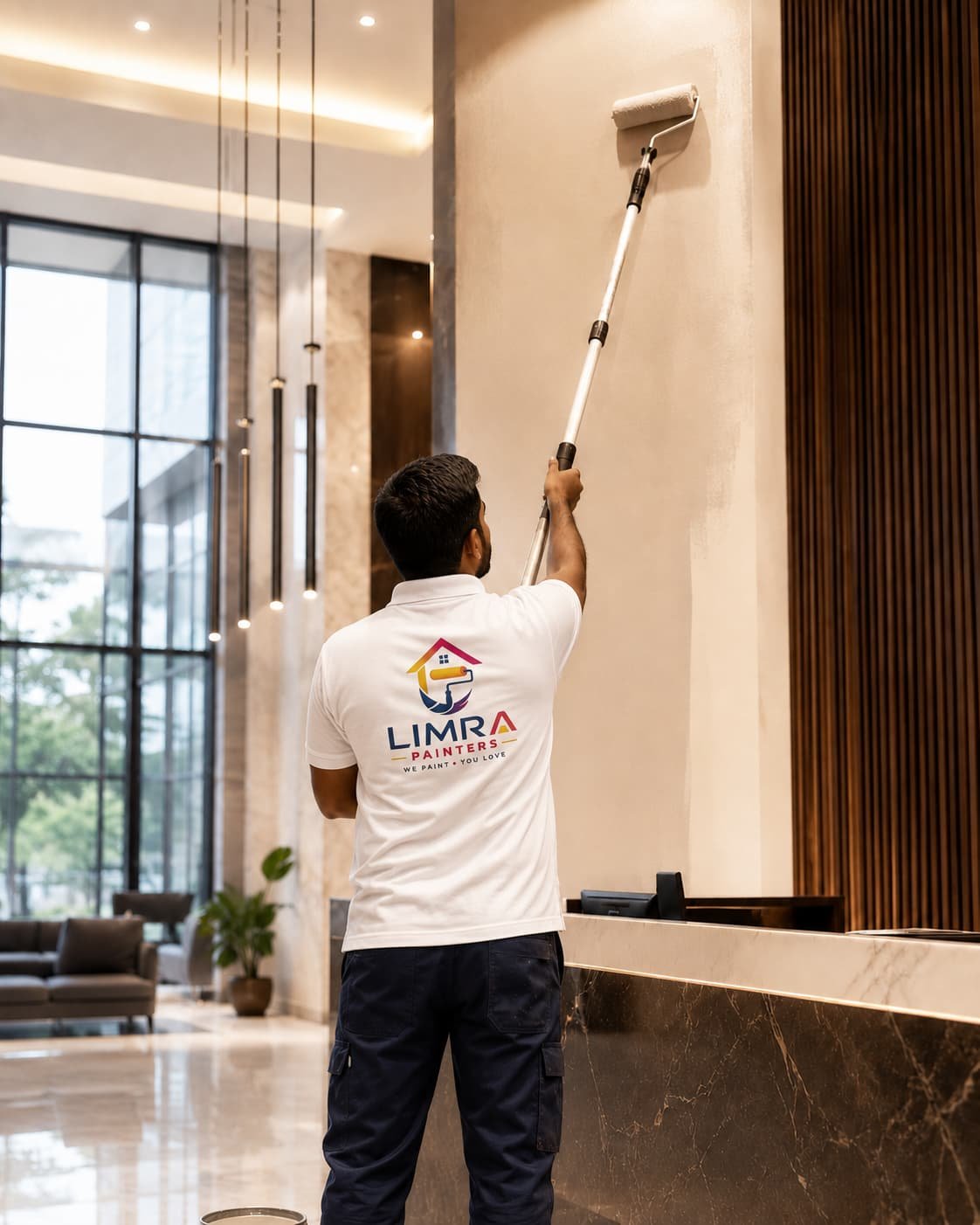
Terrace Protective Coating Hyderabad for prepared, detailed surfaces
Terrace Protective Coating Hyderabad by Limra Painters begins with inspection—not an automatic promise that one coat will solve every water problem. We review the surface, cracks, joints, outlets, slope, parapet junctions and previous treatments before discussing a suitable preparation and coating sequence.
Protective coating works best when the terrace problem is correctly identified
Water visible inside a room does not automatically prove that the open terrace floor is the only source. Entry can occur through parapets, pipe penetrations, construction joints, neighbouring walls, water tanks, plumbing lines, broken tiles, blocked outlets or cracks hidden below an older treatment. Limra Painters therefore treats the first visit as a condition review rather than a product-selling exercise.
For a straightforward terrace, the work may include cleaning, suitable local repair, detailing and a liquid-applied protective system. For a terrace with loose screed, widespread hollowness, failed tiles, major cracks or persistent ponding, civil correction or a specialist waterproofing design may be required before a coating can perform properly. That distinction protects the customer from paying for a decorative surface treatment where the actual defect is deeper.
Customers comparing this page with our exterior painting services should remember that vertical exterior paint and horizontal terrace coating face different water exposure, movement and foot-traffic conditions. The product and preparation sequence must match the actual surface.
Terrace Protective Coating Hyderabad planned as a complete sequence
The final quotation may include some or all of these stages. Every stage is confirmed according to the surface and the selected manufacturer system.
Terrace condition inspection
Review cracks, old coatings, ponding marks, loose layers, outlets, parapet junctions and movement-prone areas before selecting any treatment.
Surface cleaning and preparation
Remove dust, weak material, algae, oil, loose coatings and unsuitable patches so the proposed system has a sound base.
Local crack and joint treatment
Treat suitable non-structural cracks, pipe penetrations, junctions and selected weak points using compatible repair materials before the main coating.
Parapet and wall-junction attention
Check the terrace-to-parapet junction, vertical returns and rain-exposed edges because water entry often occurs beyond the open floor area.
Drain outlet and slope review
Identify blocked outlets, reverse falls and ponding. A coating cannot replace necessary civil correction where water has no proper path to drain.
Primer or bonding layer
Use the manufacturer-recommended primer or bonding coat when required for the substrate and selected protective system.
Protective liquid coating system
Apply the appropriate number of coats at the specified coverage, direction and drying interval for the selected product and terrace condition.
Detailing around pipes and projections
Give separate attention to bases of pipes, supports, solar structures, water-tank areas and other penetrations that interrupt the terrace surface.
Curing, inspection and handover
Protect the newly treated surface from premature foot traffic and water exposure, then inspect continuity, outlets and vulnerable details before normal use.
Six terrace conditions that change the proposed treatment
1. Ponding and slope
Repeated standing water can indicate insufficient fall, depressed patches or blocked outlets. Drainage correction may be more important than adding another surface layer.
2. Existing layers
Old acrylic coating, bituminous treatment, tiles, screed or unknown chemicals can affect adhesion and compatibility. Weak or unsuitable layers may need removal.
3. Crack behaviour
Hairline surface cracks differ from wide, moving or recurring cracks. Movement-related defects should not be hidden under a routine coat.
4. Junctions and penetrations
Parapet corners, pipes, supports, water-tank bases and solar structures require individual detailing rather than only rolling the open floor.
5. Surface strength
Powdering, loose plaster, hollow screed, algae and contamination can prevent proper bonding. A coating is only as reliable as the prepared base beneath it.
6. Hidden water sources
Plumbing leaks, overhead tanks, neighbouring walls or external rain entry may create symptoms that continue even after the terrace floor is coated.
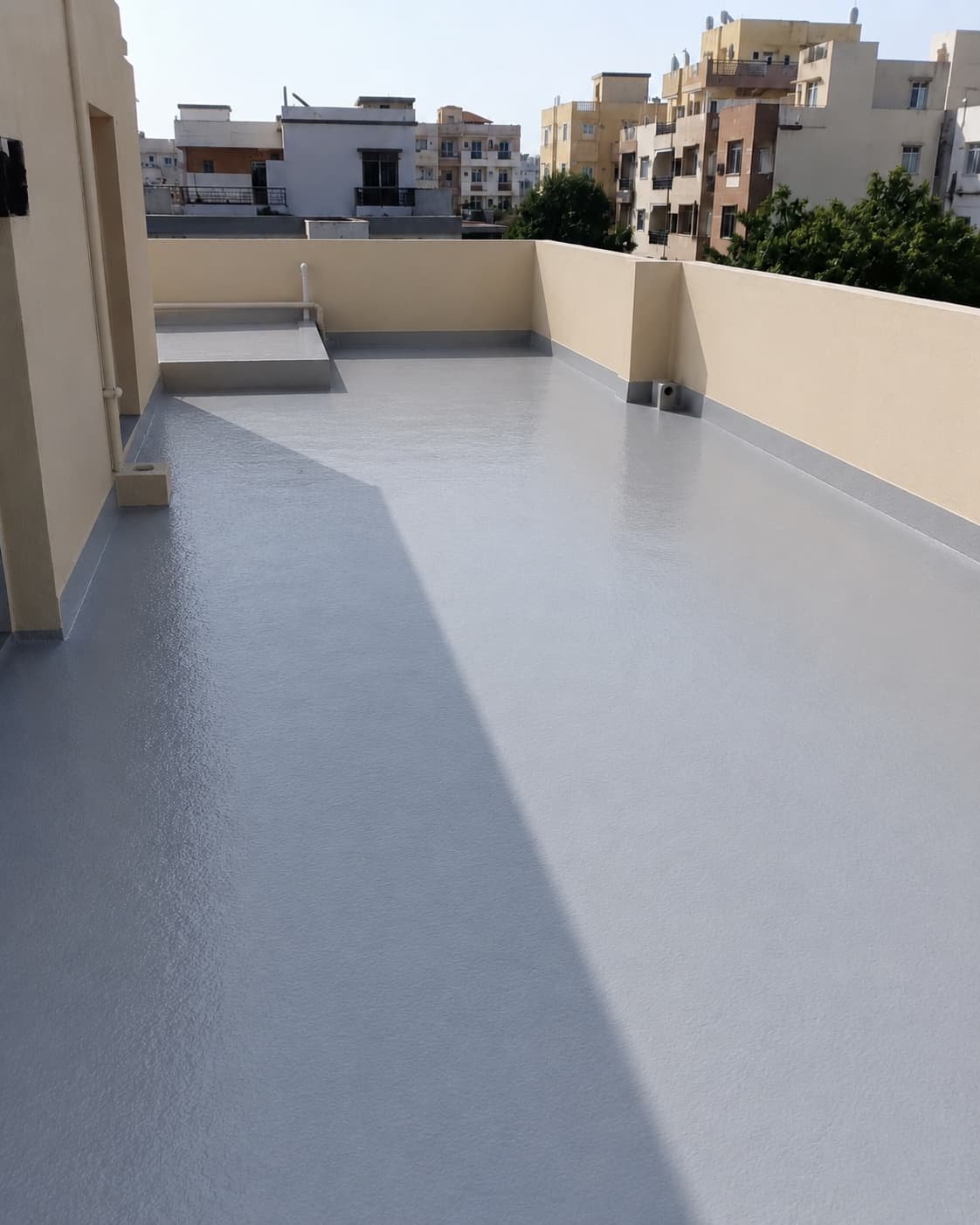
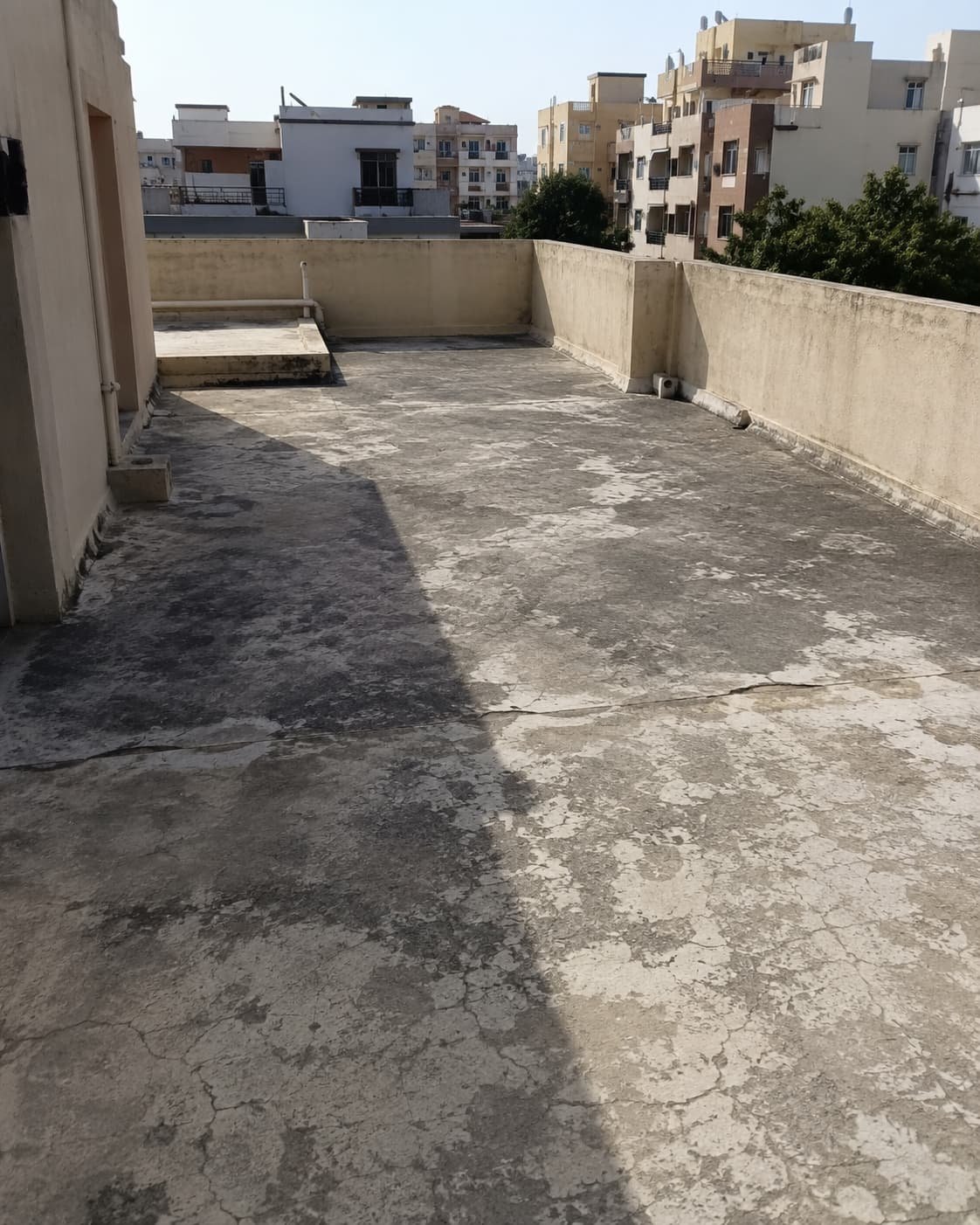
Terrace before and after protective coating work in Manikonda
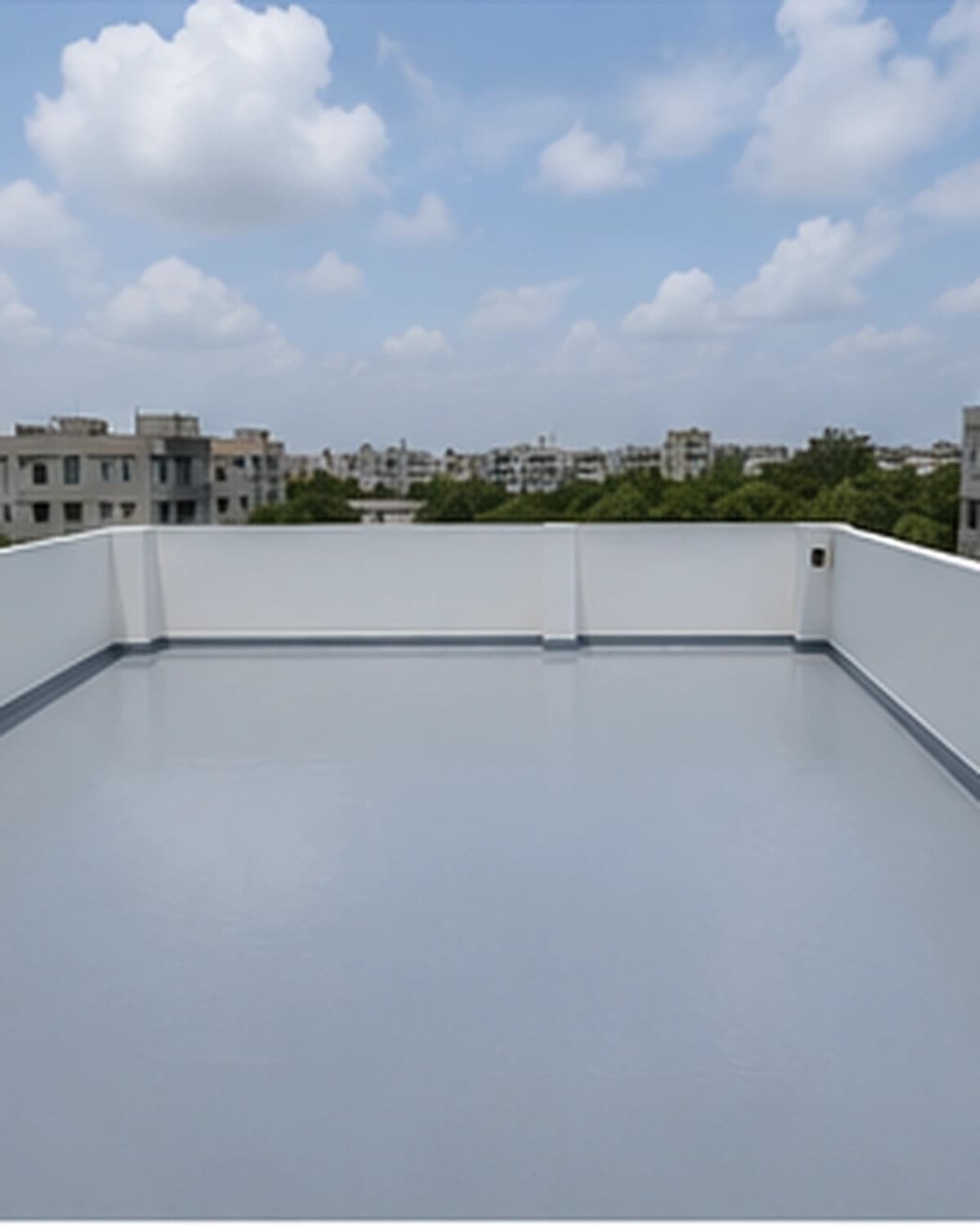
These Manikonda images show the same terrace category before and after the protective-coating process. The first visual shows the older exposed terrace floor before preparation, while the second shows the finished terrace after the selected repair, application, drying and curing sequence.
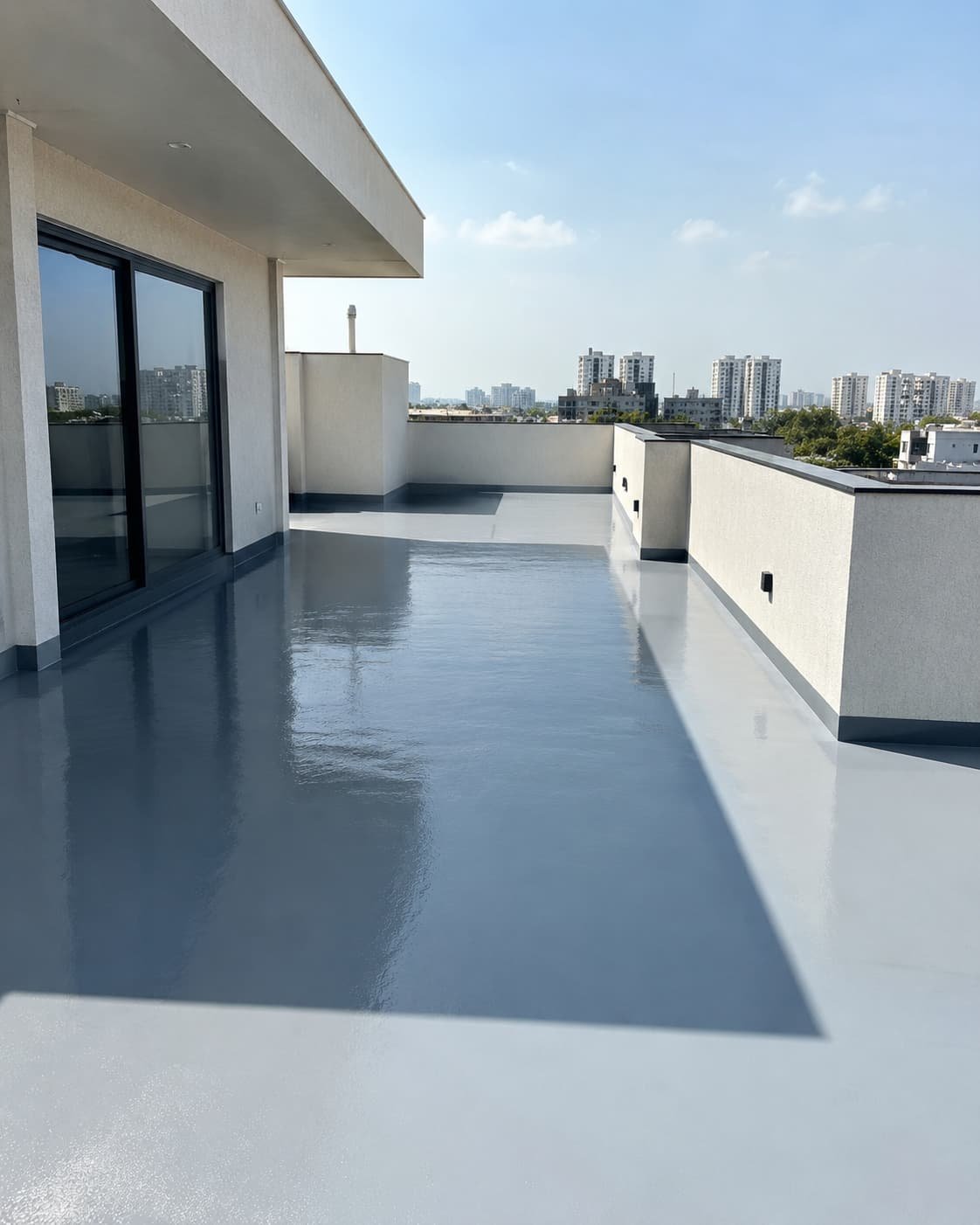
Terrace waterproofing and floor-condition visuals from Attapur and Kondapur
These additional tagged images help customers understand terrace waterproofing work and the condition of a terrace floor before a protective system is selected. They are supporting project visuals, not substitutes for a site inspection.
A practical sequence from terrace review to handover
Application discipline matters
Coverage should not be reduced merely to make the quotation cheaper. Coat direction, consumption, mixing, drying time, surface temperature and weather window should follow the selected product instructions. Detailing at outlets and junctions is completed before or together with the field coats according to the system.
The terrace should remain protected from dust, rain, stored items and premature foot traffic during application and curing. Where testing is appropriate, the timing and method should be discussed so the new system is not exposed before it is ready.
Situations where coating alone should not be presented as the final answer
Limra Painters does not treat every ceiling stain as a simple coating job. The following conditions can require civil, structural, plumbing or specialist waterproofing assessment.
- Wide, moving or repeatedly reopening cracks.
- Loose, hollow or badly deteriorated screed.
- Severe ponding caused by incorrect levels.
- Active plumbing or water-tank leakage.
- Water entering through neighbouring walls or joints.
- Failed tile beds or widespread hollow tiles.
- Structural movement, settlement or slab defects.
- Unknown incompatible chemical layers.
What affects terrace protective coating cost in Hyderabad
Area and measurement
The open floor, parapet returns, upstands, pipe bases and detailed zones can all contribute to the measured scope.
Surface condition
Cleaning, old-layer removal, algae treatment, local repairs and weak screed increase preparation compared with a sound new surface.
Selected system
Primer, reinforcement, crack materials, number of coats and specified consumption vary by manufacturer and application.
Access and safety
Stair access, lift restrictions, high parapets, external edges and material movement influence planning and labour.
Civil correction
Slope correction, outlet modification, tile removal or screed work should be quoted separately rather than hidden inside a coating rate.
Weather and scheduling
A reliable dry window and protected curing period may affect the sequence, especially during Hyderabad’s monsoon season.
The correct protective system depends on the terrace beneath it
Customers often compare waterproofing products only by warranty period, price per square foot or the number of coats advertised. Those details matter, but they do not replace a substrate assessment. A sound concrete or cementitious terrace, an old tiled terrace, a previously coated terrace and a terrace with weak screed are four different starting points. The primer, repair material, reinforcement and field coating must be compatible with that starting point.
On a sound but weathered cement surface, cleaning, local repairs and a suitable liquid membrane may be practical. A tiled terrace may require joint inspection, hollow-tile checks and a primer designed for low-porosity surfaces. An old coated terrace may need adhesion testing or removal of loose material. Where the base itself is unstable, adding a stronger coating on top does not make the weak layer beneath it stronger.
Colour and finish also affect use. Lighter reflective finishes may be selected where compatible with the system, while walkable areas need attention to slip resistance and expected foot traffic. A terrace frequently used for drying clothes, servicing tanks or accessing solar equipment should be discussed differently from a roof that is rarely entered. The quotation should state what normal use is expected after curing and whether protective walkways or restricted zones are advisable.
Match system to surface and use
The terrace material, drainage, movement, foot traffic and previous treatment influence the recommended coating sequence. A product name alone is not a complete specification.
A good application can still fail when timing and after-care are ignored
Choose a reliable dry window
The surface must be dry enough for the selected system, and the forecast should allow preparation, application and curing without unexpected rain. Starting just before a storm can trap moisture, wash uncured material or interrupt the specified coat interval.
Control dust and other trades
Plumbing, solar, tank-cleaning, masonry and electrical work should not continue across a freshly prepared terrace. Dust, drilling, sharp equipment and foot traffic can damage details before the protective layer has gained strength.
Respect coat intervals
Applying the next coat too early can trap moisture or disturb the earlier layer; waiting beyond the recommended window may require additional preparation. Manufacturer instructions and site conditions should guide the timing.
Protect outlets during work
Drain mouths must remain identifiable and functional. Debris, masking material or excess coating should not reduce the outlet opening or create a raised edge that encourages water to remain nearby.
Inspect after major weather
After heavy monsoon rain, check outlets, ponding areas, pipe bases and parapet junctions. Early photographs of a new mark or crack are more useful than waiting until the defect becomes widespread.
Avoid unplanned punctures
Later installation of solar frames, dish supports, shade structures or tank pipes can puncture the protected surface. Any new fixing should be planned and detailed so it does not create a fresh water-entry path.
Simple maintenance protects the investment
Keep the terrace reasonably clean, remove leaves and debris from outlets, and avoid dragging sharp objects across the finish. Do not use harsh chemicals unless the coating manufacturer permits them. Where water tanks overflow regularly, repair the plumbing instead of accepting continuous saturation around the tank base.
Small visible damage should be reviewed before monsoon rather than covered with an unrelated patch material. Compatibility matters during maintenance just as much as during the original application. Keep the product name, colour, batch information where available, date of application and photographs of detailed areas. This record helps future technicians distinguish the original system from later repairs.
Read official waterproofing guidance before comparing systems
These manufacturer resources help customers understand that surface preparation, compatibility, coverage and curing are product-specific. The final recommendation still depends on the inspected terrace.
Asian Paints SmartCare
Official waterproofing overview and terrace-related systems, including surface-preparation guidance.
Open official resource →Berger HomeShield
Official waterproofing range covering terrace, tank and other moisture-protection applications.
Open official resource →Nerolac Perma
Official terrace waterproofing guide discussing surface type, climate and solution selection.
Open official resource →Terrace inspection and protective coating enquiries across Hyderabad
Availability is confirmed according to location, terrace condition, access, weather and the proposed work sequence.
Frequently asked questions about Terrace Protective Coating Hyderabad
Is terrace protective coating the same as complete waterproofing?
Not always. Protective coating may form part of a waterproofing plan, but the correct solution depends on the terrace build-up, cracks, joints, slope, drainage, previous treatments and the source of water entry.
Can a coating stop every terrace leakage?
No. Active plumbing leaks, structural cracks, failed screed, severe ponding, hidden joint failure and water entering from adjacent walls may require civil, plumbing or specialist waterproofing work before or instead of a surface coating.
Can coating be applied over old tiles?
Some systems may be suitable over properly prepared tiles with compatible primers, while other conditions require removal or a different treatment. Adhesion, hollow tiles, joints, slope and product instructions must be checked.
Why does water remain on my terrace after rain?
Ponding commonly relates to inadequate slope, blocked or undersized outlets, settlement or local depressions. The drainage problem should be assessed because a coating alone does not create the required fall.
Do terrace cracks need repair before coating?
Suitable non-structural cracks and joints generally need compatible preparation before the main coating. Wide, moving or recurring cracks should be technically assessed rather than simply covered.
How long should the terrace remain unused?
The restriction period depends on the selected system, weather, coat thickness and manufacturer instructions. Premature walking or water exposure can affect curing and continuity.
Can the work be done during rainy weather?
A dry and suitable weather window is normally required for preparation, application and curing. Work should not be scheduled when rain, active dampness or unsuitable surface temperature can compromise the system.
Will a waterproof coating reduce terrace heat?
Some reflective systems may reduce surface heat under specified conditions, but performance varies by product, colour, coverage, substrate and exposure. Heat reduction should not be promised without the selected product data.
How is the terrace coating price calculated?
Pricing depends on area, surface condition, access, preparation, crack and joint treatment, parapet details, number of coats, product system and whether civil correction is required.
What details should I send for an estimate?
Share terrace photos, approximate area, location, surface type, age, visible cracks, ponding areas, outlets, previous treatments and photos of any dampness visible on the ceiling or walls below.
Send terrace photos before choosing a coating system
Share the surface, cracks, outlets, ponding areas and any dampness below. Limra Painters will review the requirement and discuss whether a site inspection is needed.